
Contacts
We’re here to help — reach out to us with any questions or inquiries.
Address
28 Jonathan St,
Hagerstown, MD 21740
Positive Pathway and Wellness Center
PTSD can develop after experiencing or witnessing a traumatic event, leaving lasting emotional and physical effects. Symptoms may include intrusive memories, heightened anxiety, sleep disturbances, or feeling constantly on edge.
Our approach to PTSD care begins with creating a safe, understanding space where you can process experiences at your own pace. We focus on evidence-based care and gradual healing that helps reduce fear, build resilience, and restore a sense of stability and trust in yourself and your surroundings.
Healing from trauma takes time, but with compassionate care and steady support, recovery is absolutely possible.
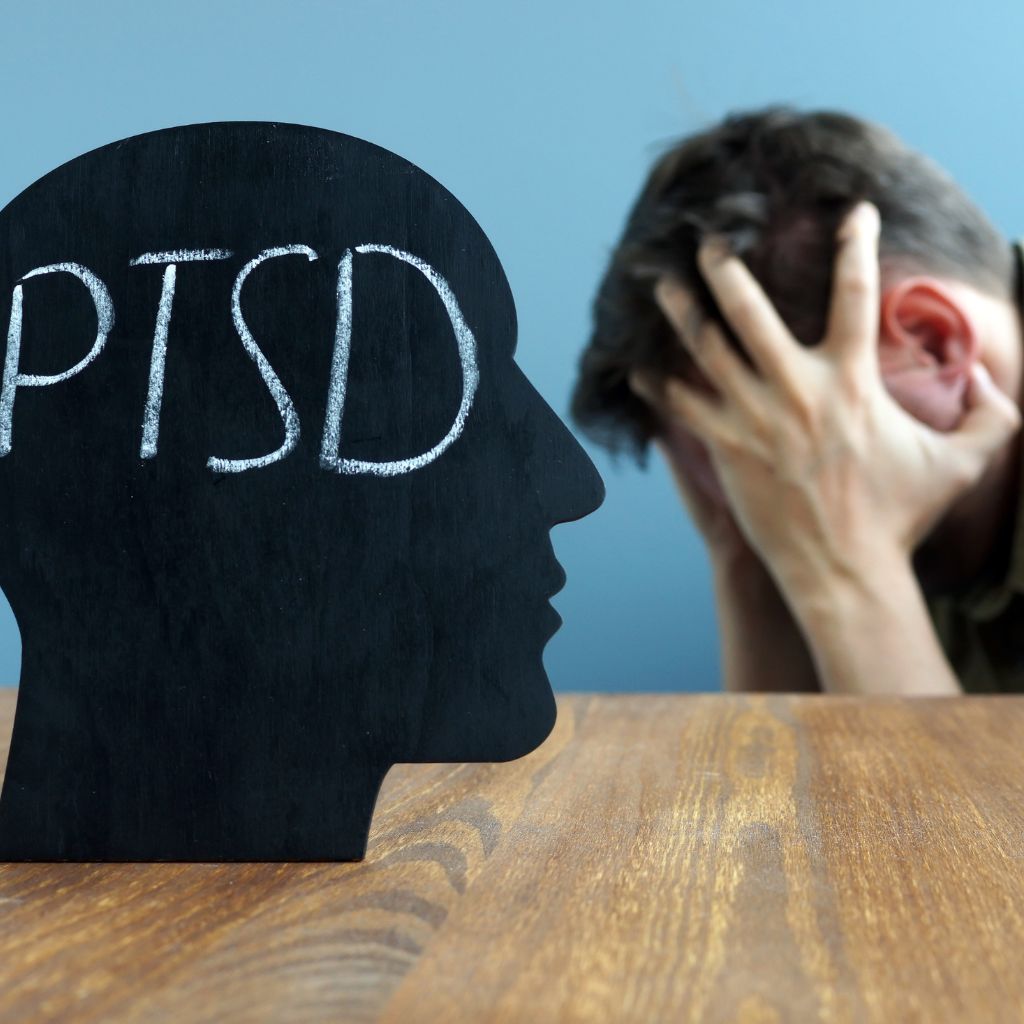
Post-traumatic stress disorder develops when the nervous system stays organized around a threat that has already passed. The body continues to respond as though danger is present — scanning, bracing, reacting to reminders — long after the event ended.
PTSD can follow a single incident such as an assault, accident, or medical emergency, or accumulate over prolonged exposure: childhood abuse, domestic violence, combat, or years of first-response work. Symptoms sometimes appear within weeks and sometimes surface months or years later, often triggered by an unrelated stressor. A delayed onset does not make the diagnosis less valid.
Many people recognize the hyperarousal and avoidance long before they connect either to the original event.
You do not have to recount the trauma in detail to be assessed. Our evaluation is built around what your symptoms are doing to your life now — sleep, relationships, work, avoidance — and you control how much history you share and when. Being asked to relive an event before there is any stability in place is not treatment, and we do not work that way.
We also screen for what commonly accompanies PTSD: depression, anxiety, insomnia, and substance use that began as a way to sleep or to blunt the memories.
Early work focuses on sleep, grounding skills for flashbacks and dissociation, and reducing anything that is currently making things worse. Processing work is more effective and far more tolerable once that foundation exists.
Evidence-based therapy addresses the beliefs trauma leaves behind — about safety, trust, control, and self-blame — and gradually reduces the power of avoided reminders. Pace is set collaboratively, and you can slow it down at any point.
Medication management can reduce hyperarousal, improve sleep, and treat co-occurring depression, making therapy possible for many patients. We discuss options for trauma-related nightmares specifically, since untreated nightmares keep the whole system activated.
PTSD is widely associated with combat and assault, and that association causes people to rule themselves out. Medical trauma, a difficult birth, a serious accident, sustained childhood instability, caring for someone through a long illness, and repeated exposure through work — emergency services, healthcare, child protection — all produce the same symptom pattern.
If your life changed after something happened and has not changed back, that is worth an appointment regardless of which category the event falls into. You do not have to justify the event to qualify for help.
Treatment does not erase the memory, and anyone promising that is overselling. What changes is the memory’s grip — it stops arriving uninvited, stops carrying the full physical charge, and stops organising your decisions around avoiding it.
Most people notice sleep improving first, then the startle response settling, then the avoidance loosening. Mood and relationships usually follow rather than lead. Progress is rarely linear, and a difficult fortnight after a good month is normal rather than evidence that treatment has failed.
Families often ask what they should and should not do. A few things hold up consistently:
You are welcome to attend part of an appointment with the patient’s written permission.
It also helps to know that recovery does not require the person to become who they were beforehand. Most people describe arriving somewhere different rather than somewhere previous — the event remains part of their history, but it stops setting the terms of daily life. Setting that expectation early tends to reduce the sense of failure that comes from measuring progress against a version of themselves that predates what happened.
We see patients in person at 28 Jonathan St in Hagerstown and by secure telehealth across Maryland. Many trauma survivors prefer telehealth for the first several visits, and that is an entirely reasonable place to start.
Call (240) 413-1255 when you are ready. There is no requirement to be ready to talk about everything — only to begin.
Not to begin, and not before you are ready. The first appointment is about your current symptoms and what they are costing you. Trauma processing, if and when you choose it, happens later and at a pace you set.
No. PTSD does not resolve on its own with time, and treatment is effective regardless of how long ago the event occurred. Patients routinely make substantial progress on trauma from decades earlier.
Memory gaps are a recognized feature of trauma, not an obstacle to treatment. Effective work targets the symptoms and beliefs the trauma left behind, and does not require a complete narrative.
There are options specifically studied for trauma-related nightmares, and improving them often lifts everything else, because uninterrupted sleep is what allows the nervous system to settle. We will discuss what fits your situation.
We’re here to help — reach out to us with any questions or inquiries.
28 Jonathan St,
Hagerstown, MD 21740